
welcome to the work
After two decades in this industry, I’ve learned a lot. From humble beginnings and startup roots to big advertising and design leadership, I’ve seen things change and evolve in ways that help me be a better designer, leader, and mentor.
the case studies

Advertising
A range of case studies that showcase my advertising, experiential, and branding work.
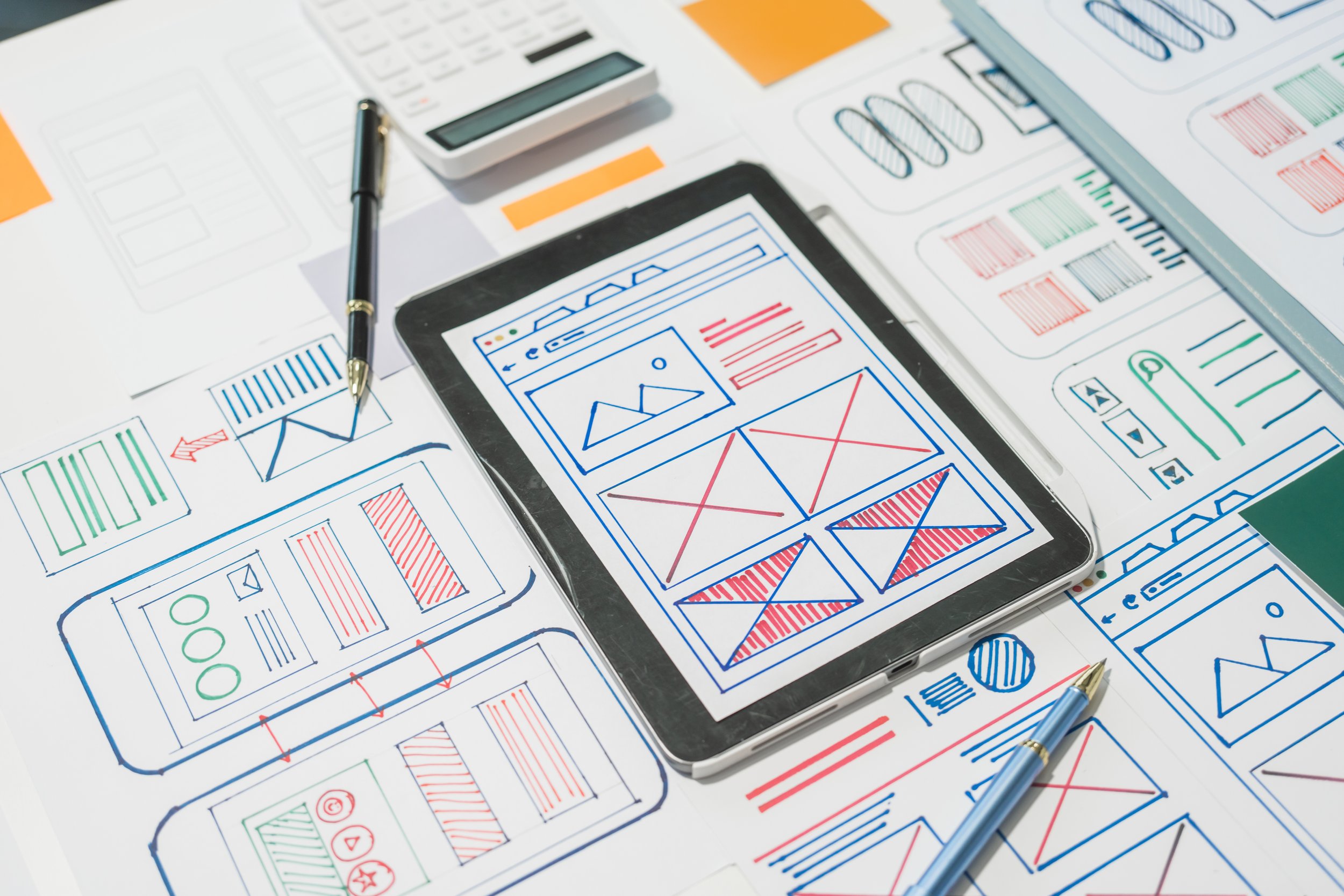
ux/ui design
A collection of stories around the projects I worked on that were primarily related to Product or Design Thinking
HOW I WORK
Design leadership has changed over the past few years and the landscape is different than it was. I’ve noticed that there is a perception from non-design crafts that design is a “blocker”, not in budget, or that UX/UI isn’t what’s needed right now. All valid concerns, but relegating Design to an “add-on service” runs the risk of work that is functional, results-driven and usable, but not intuitive, brand consistent or accessible.
As Design Leaders, we now must become evangelists and educators as well as innovators. This means a our role description & responsibilities are evolving.
My Design Leadership Style

Advise team shape, skills, depth of craft and staffing
Advise on specialized activities like research, content design, DesignOps or prototyping.
Hire & build teams based on the business need
Create community for teams & support growth & mentorship
PEOPLe

Lead change management based on IC & Leadership experience
Align team culture & ways of working
Shape model for how the group designs & ships deliverables
Build engagement models for collaboration with other teams
Evangelize team capabilities to external & internal clients
PRACTICE

Bring domain expertise to the needs of the customer & business at every level
Proactively designing initiatives tied to biz goals
Apply knowledge set to the advantage of the organization
Encourage solutions beyond short-term & have a seat at the strategy table
STRATEGY

Expectation of execution skill is becoming more pronounced
Increases value for small, agile teams to have IC knowledge and Leadership wrapped in one
Grants hands-on approach to leadership vs only bureaucratic
Execution experience allows for faster estimation of work & can identify warning signs that are typically discovered by ICs
Execution
THOUGHT LEADERSHIP Examples

Hire the right people first, then keep them
It’s obviously important to hire the right person for the needs of the organization. But, I believe in staffing “multipliers” to my team; a multiplier will amplify a teams work, influence and outcomes. If that’s a hands-on SME in the weeds, you need a Lead Designer. They will be able to drive towards outcomes, but are less likely to be able to focus on driving practice or growing people. A lead would be a 1:1 multiplier.
A Design Director recognizes the value of innovation. Change starts at the top, requiring leaders to do some soul searching. Design leaders have a 1:Many multiplier ratio in teams. Being diligent and prescriptive in how you hire is one of the most critical areas of influence for success in a Design Team. Defining roles & responsibilities is just as important as doing the work.

TOOLS can’t fix it all, but mastery grants options
As technology constantly moves forward, new processes and products enter the market. Design Leaders must to recognize that industry tools like Figma are not the whole output of design. Its a tiny piece of the puzzle. Its a way to realize strategies, not define them. I recently went out and got my Figma Academy Certification. I may not use it everyday, but being a SME in the tool-space is an indispensable advantage as a leader. Even with AI, it’s about maintaining cautious, yet curious optimism to make sure the tool is as market-ready you are.
Tools aren’t everything. Make sure there are opportunities to broaden your team’s skills and have a roadmap that continues to up-skill. Eventually change happens at the leadership level and design will get a more permanent seat at the table.

Thoughts on AI within UX/UI
Current industry assessment & Personal POV
AI in UX and UI is genuinely useful, but only when there's a trained human in the loop. Tools like Figma and Adobe Firefly are making real workflows faster, and platforms like Anima, Locofy, and Builder.io are finally starting to close the handoff gap between design and front-end development in meaningful ways. That's progress worth paying attention to.
What I'm more cautious about is the assumption that “speed equals quality”. AI inherits the biases and accessibility failures of whatever it was trained on, and without a human gateway reviewing the output, you're not accelerating good design. You're scaling mediocre (or worse) design faster. Every generated component, every suggested layout, every auto-spec'd token still needs a trained eye on it. Someone who understands the user, the context, and the consequences of getting it wrong.
That's where I think the ethics conversation needs to land. Not in abstract policy, but in practice. Who is accountable for what the AI produces? How do we build review into the workflow rather than treating it as optional? The tools are getting better and the efficiency gains are real, but the judgment, the craft, and the responsibility still have to belong to the people doing the work.

AGENTIC AI + UX/UI: What’s next for us?
Agentic AI, which means systems that can make decisions and take action on their own, is going to change how we design and experience UX and UI in the next couple of years. Instead of users clicking through screens to get things done, these AI agents will start taking the lead by predicting what people need, suggesting actions, and even kicking off tasks automatically. That means interfaces will need to be more flexible, more conversational, and able to work across different types of inputs like voice, text, or gestures. Designers will have to rethink how people interact with systems when they're not always the ones starting the interaction.
That said, human factors still matter a lot. Even with smart AI running things in the background, people still need to feel in control. They need to understand what the system is doing and why, especially if it's doing things without being asked. Trust and clarity are going to be key. Designers will need to build in ways for users to get feedback, pause or undo actions, and feel confident the AI is working in their best interest. So while agentic AI can make things faster and smarter, good UX and UI will make sure it still feels human.

Perfection is achieved, not when there is nothing more to add, but when there is nothing left to take away
-Antoine de Saint-Exupéry